Kitchen Ventilation Startup & Commissioning
Get the hood, fans, makeup air, and controls operating together.
TCS supports new installations, renovations, equipment replacements, and difficult punch lists with measured startup and operational verification.
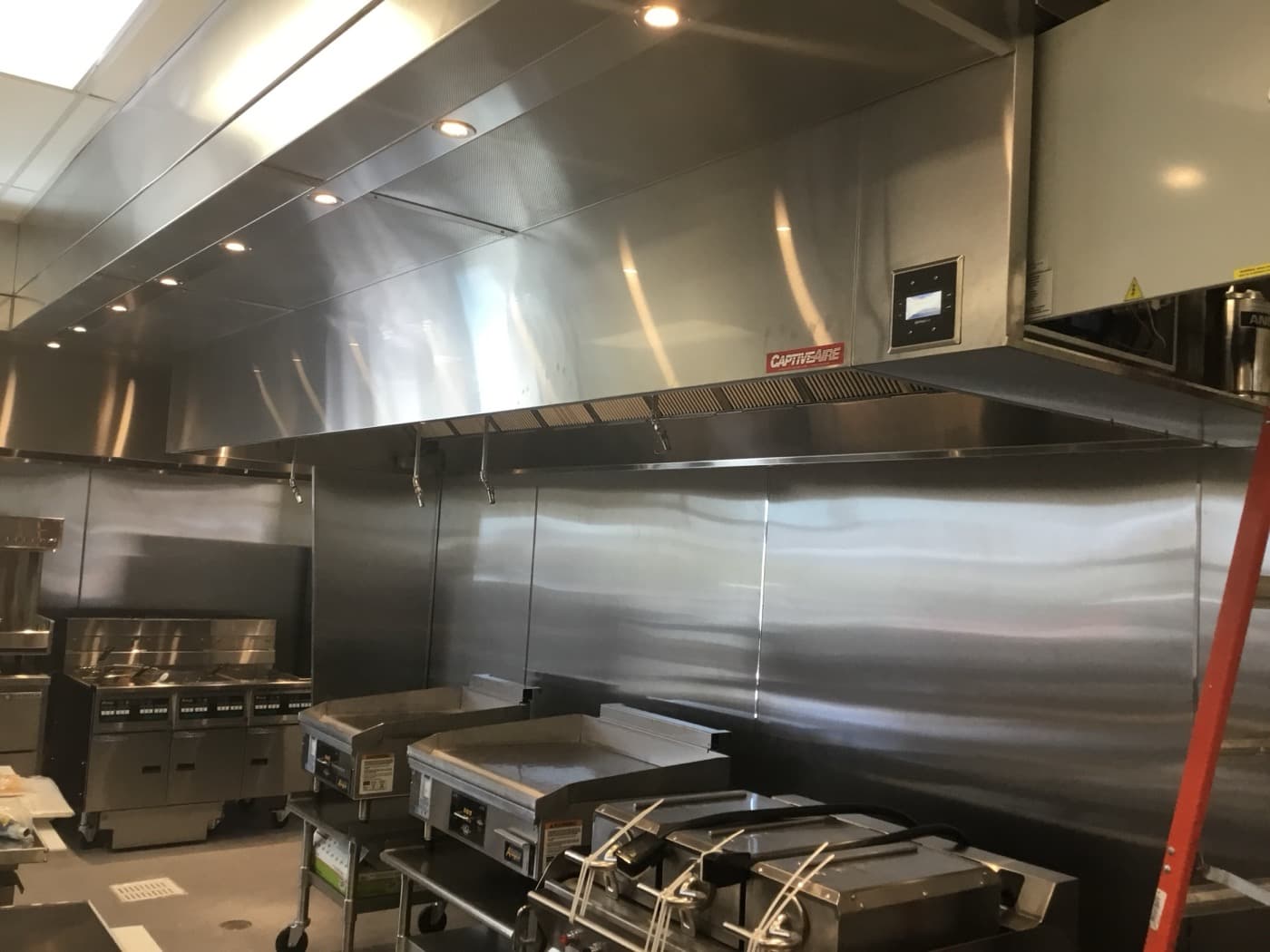
Service Scope
A concise field check with useful closeout.
Equipment checkout
Fan rotation, motor operation, belts, filters, dampers, safeties, power, and visible installation conditions.
Controls & sequence
VFDs, sensors, starters, interlocks, fan commands, fire-system interfaces, and sequence-of-operation checks.
Airflow & capture
Exhaust and supply readings, pressure conditions, hood capture, and operational observations.
Punch-list closeout
Settings, readings, faults, corrections, and remaining responsibilities documented clearly.
Included when applicable
Exhaust and supply fan startup
Rotation and amperage checks
VFD and control verification
Makeup-air interlock testing
Operational airflow readings
Smoke-capture observation
Deficiency documentation
Manufacturer closeout support
Separate trade or approval
Official FDNY hood or fire-suppression inspection
Fire-suppression testing or certification
Engineering design or a professional engineer’s stamp
Certified TAB report unless separately contracted through the appropriate party
Field Sequence
Four steps from arrival to closeout.
Review the assignment
Confirm equipment schedules, controls, responsible trades, startup requirements, and the desired closeout.
Check the installation
Verify equipment condition, access, power, rotation, wiring, controls, safeties, and readiness.
Run the sequence
Operate exhaust, makeup air, VFDs, sensors, interlocks, and connected equipment through the required modes.
Document the result
Record readings, settings, completed corrections, open deficiencies, and practical next steps.
Project Questions
Clear scope before dispatch.
When should TCS be scheduled for startup?+
Schedule after equipment, controls, power, fan wiring, roof access, and related trades are substantially ready—but early enough to correct deficiencies before the final project deadline.
Can TCS help when the installed system fails startup?+
Yes. TCS can trace mechanical, electrical, controls, VFD, interlock, airflow, and coordination problems and document which party or component must correct each issue.
Is this the official FDNY hood inspection?+
No. TCS provides ventilation startup, operational verification, airflow checks, and corrective troubleshooting. The official NYC hood or micro-switch inspection must be handled by the properly licensed fire-suppression contractor and approving authority.
Project Request
Send the plans, equipment list, and startup deadline.
Include the site address, manufacturer, hood and fan schedule, controls information, responsible trades, current deficiencies, and required completion date.